From Loss-Making Startup to Profitable Fintech Leader
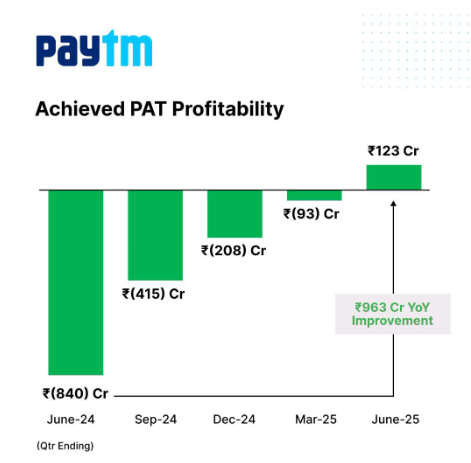
Paytm’s journey from a loss-making startup to a profitable fintech powerhouse has marked a major turning point with its Q1 FY26 results. After years of heavy investment and regulatory hurdles, the company has finally entered a new era of operational and financial maturity.
Key Drivers of Profitability
- AI-led Operational Efficiency: Leveraging AI to reduce manpower and automate processes.
- Cost Optimization: 18% YoY drop in expenses; employee cost fell by 32%, marketing by 50%.
- Strong Lending Growth: Financial services revenue doubled with higher loan disbursals and improved collection.
- Diverse Revenue Mix: Less dependence on cashback models; higher-margin businesses scaling up.
Future Goals & Strategic Outlook:
 Maintain Profitability: Sustain EBITDA margin and free cash flow generation.
 AI Expansion: Expand AI capabilities across customer support, risk analysis, and product delivery.
 Financial Services Push: Continue to scale lending and insurance services.
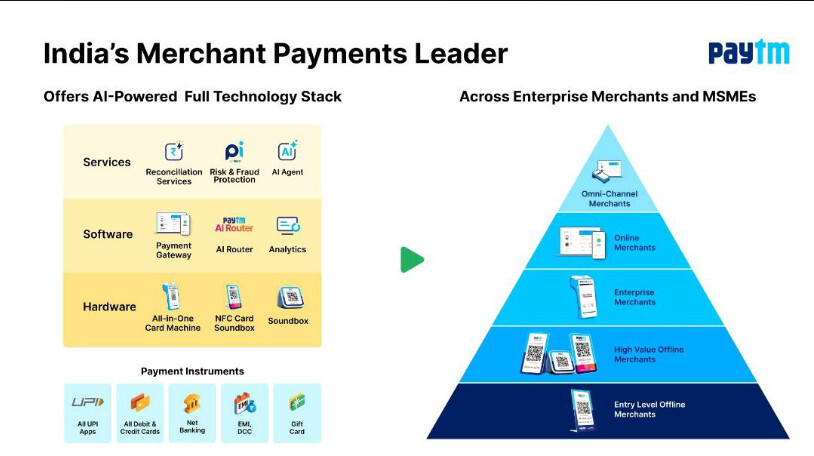
 Merchant Ecosystem: Target 1.5 Cr device deployments by FY26-end.
 Global Payments Opportunity: Explore new geographies and partner with NBFCs for cross-border and offline payments.
 The Road Ahead
Paytm’s Q1 FY26 results signal more than just a profitable quarter—they mark the beginning of a new growth cycle for the company. With disciplined financials, tech-driven innovation, and a growing merchant and consumer ecosystem, Paytm is well-positioned to cement its place as a leading digital financial services platform in India.
Stay tuned, because the Paytm story is just getting started.
longterm, #stayinvested #turnaroundstory